
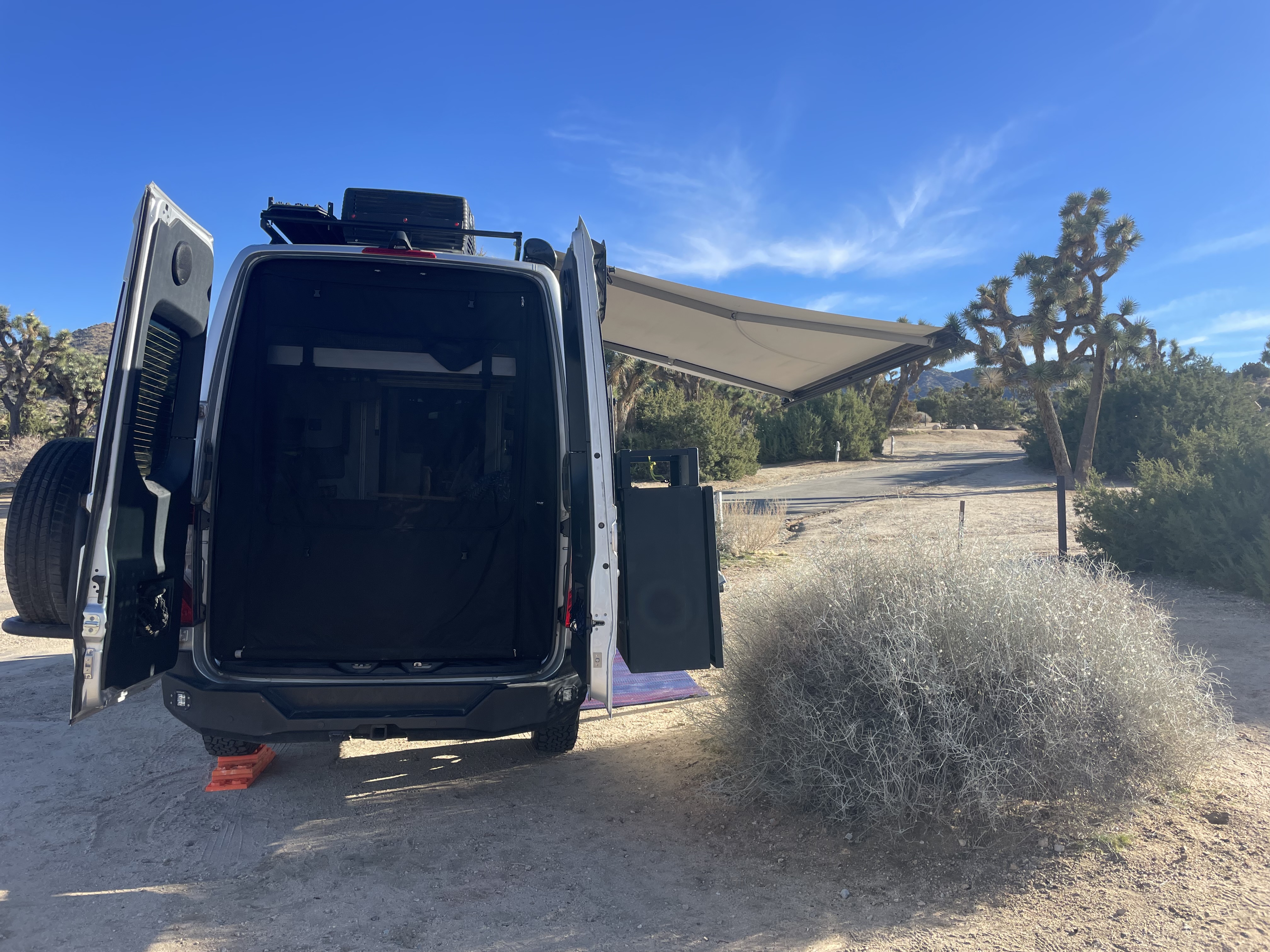

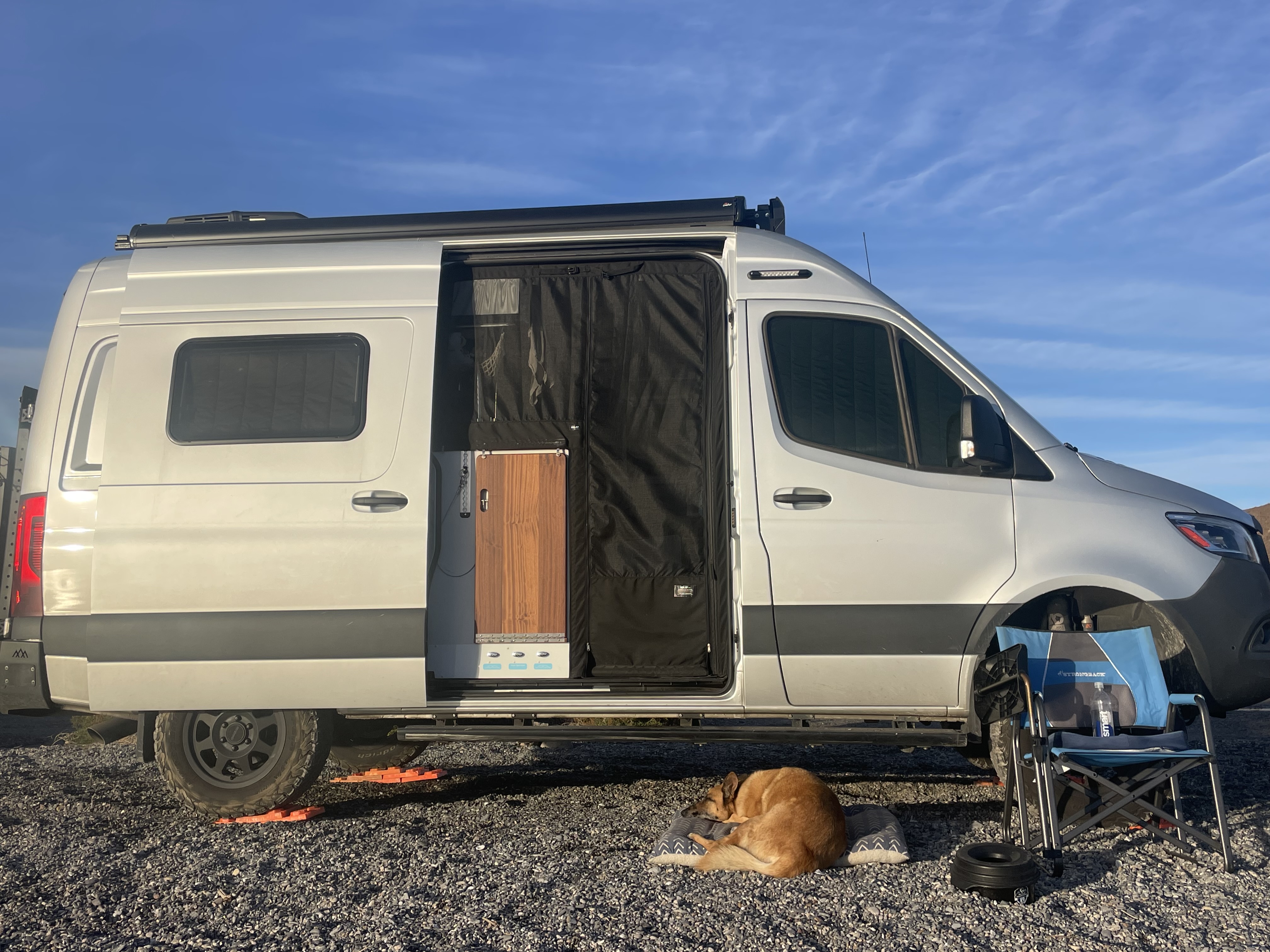
(This is the first in a series of posts I am writing about the reality of van living. After you finish this post, look for Chapters 1 and 2, which have also been published. Chapters 3 and 4 are on the way soon!)
Van life is something plenty of people aspire to, and all of the influencers and authors who write about van life are often sharing it through a filter — an overly-sunny one designed to sell more books, get more ad revenue, or to make you ‘smash that like button.’
I have long-wanted to present a more realistic, unvarnished look at what van life is really like— not just sharing the photos of the destinations I reach, but also conveying the physical and emotional experience of living inside a 19-foot space day in and day out.
Yet, of all the posts on this blog, it’s taken me the longest to form my thoughts about this topic. I have started and stopped this entry at least a dozen times, waiting for some lightning bolt of clarity to hit— hoping some breakthrough would happen.
This ‘aha’ moment never came— until I spent a little time outside of my van. Let me explain.

When I was about a year into van life, I returned to my friends and community in the Pacific Northwest for a much-needed break for the summer (also, who wants to be out on the roads and in the national parks in the most crowded season? I don’t).
I did some couch-surfing, and some spare-bedroom stays, and stored in the van safely for a few weeks to give Mac and I a bit of a break from it. Naturally, when I was there— people in my life asked some questions about van living.
How had it been?
What did I learn out there?
What were my favorite places I visited?
I honestly did not know how to answer these basic questions. I didn’t have a neat or compact way to describe something that was far more messy and complex than I thought it would be, despite the fact that van living is supposed to be a “simpler life.”
In some ways, it IS simpler: you have to distill your possessions to nearly nil, pack a 19-foot space with everything you need for all four seasons, daily living and working, and any emergency that might arise: you pare down to the bare minimum.
In other ways, it is much more complicated: you have to think about every drop of water you use, think about a new place to sleep each night, and think about a new destination each day. You have to navigate a different grocery store layout every time you need food, or work through restaurant reviews for what seems like the one trillionth time. You need to find dump stations to dispose of your waste. It’s logistical legwork that begins anew each day and never really ends.
People seem most drawn to the idea of a van because it represents a secret desire to “leave it all behind”— to throw off the anchors of a mortgage, a school district, a job title, and hit the open road. At least, that’s the sense I get from speaking to folks around the country, who stop me at gas stations, in checkout lines, and even at stoplights to ask me about my van. (If this sounds like an infrequent occurrence, let me assure you that I have at least one unsolicited conversation about my van with a stranger every single day).
Because of this, I am fully aware that seeing my van stirs something in people. Van life seems to be a manifestation of total freedom: a combination of simplicity and possibility.
The open road has always been a symbol of this culturally— the ability to go anywhere, anytime, with a buddy or spouse has become a whole genre of film in the U.S. And a van is, in some ways, the pinnacle of that opportunity— it’s ‘all systems go’ all the time— one can pull up stakes in a hot minute and take off for adventure.
But I do want to be clear that living on wheels for part-time adventures, and living on wheels full-time, are two vastly different things. One is an escape, and one is a constant.
When you live full-time in a van, you aren’t “leaving it all behind”— quite the opposite— you are taking it alllllll with you. And then fitting in adventures around your daily workday as best as you possibly can— which can be both magical, and absolutely exhausting.
All of the same problems come with you on the journey, and being in a van creates problems of its own. Think of your whole life: the ups, the downs, the busy work schedule, the angst of the news, the scrape toward retirement, and health issues for you and your family— all of it goes with you.
Whether a last-minute client call (scheduled when you have minimal cell signal and no access to wifi, of course) or having a stomach-busting foray into fast food in the middle of a long drive, or your dog getting debilitating diarrhea on a Sunday night in an unfamiliar place— being in the van full-time isn’t nearly the same as being on vacation.
One of the weird things is how long it took me to adjust. After a year of daily living in the van, I felt like I finally had a true handle on it— life hit a smoother flow with each passing month, but ‘working out the kinks’ was a much, much longer process than I suspected.
It took a year to stop feeling the space was small. But even though I don’t feel it consciously anymore, that does not mean I don’t ‘feel’ it subconsciously. That’s hard to explain, but I can tell when my muscles start to feel cramped from head to toe, or when I get overly cranky— that I actually need some relief from the tightness of the space. I think my body feels it in a way that my mind does not register.
For example, I once sat down in a recliner in an AirBNB, after 6 straight weeks of sleeping in the van— and cried with relief. It was only then that I realized how long it had been since I sat in a nice, cushioned, overly-padded chair. And slept on a big, comfy mattress. Van living is functional, especially in an off-road enabled van like mine— it is far from cushy— every surface is always a bit too hard or a bit too small to feel truly comfortable.
I’ve had people ask me if I am enjoying the van. Yes. It’s absolutely a gift to wake up with a world of new possibilities on your pillow every morning.
And I’d be lying if I said it wasn’t also complicated.
Once, I was getting a massage in Santa Fe— my second one with the same massage therapist in a month’s time. The first one, I had before a friend joined me in the van for an epic 3-week journey across half the country and through many awesome places: from Mobile, Alabama to New Orleans to Corpus Christi to Marfa to Carlsbad Caverns and back to Santa Fe. I was recounting the route we took, and the fun we had, when the massage therapist cut in:
“You’ve seen more stuff in 3 weeks than I’ve seen in a lifetime.”
And that stuck with me.
‘Life comes at you fast’ in the van— it’s full-on, all the time. It’s new stimulus at such a fast rate, that it can be stimulating to the point of being overstimulating. It’s a year, or ten years, or a lifetime of ‘vacations’— of seeing new places— condensed into a few weeks, with another dozen destinations to plan for immediately. It’s choice fatigue on steroids.
And even if one taps the brakes and travels to fewer destinations, the new stimulus is still constant— new stores to navigate for supplies, new roads and detours to take, new restaurants to try, new potholes to avoid, new cultures to observe: everything is forever new when in an unfamiliar place.
Which is fascinating. AND exhausting.
I promise, I’m not complaining— being in the van has allowed me to do an amazing amount of things. I have always loved seeing and experiencing new places and observing the cultural morays in each, and I’m grateful for everything I have seen and done.
But also, nothing is all-positive, and nothing is all-negative. As banal of a conclusion as that is to draw about van living, it’s the only one I can definitively draw: just like regular life, there are plusses and minuses, pros and cons— the wrinkle about van living is this:
The upsides and downsides of life the van are a mirror— two sides of the same coin. I mean that nearly literally, as every positive contains a negative as well.
I’ll examine the best— and the worst— parts of living in the van in subsequent posts, as the mirror images they have revealed themselves to be. I’ll use a format with titles that include “Upside / Downside” and talk about why these are mirror images in more detail.
You’ll notice these posts will have very few (if any) photographs– as these are more about the living part than the traveling part, and I don’t really have photos to accompany that bit.
In the meantime, I hope you’ll use me as a resource if you are thinking about taking a road trip, or any trip, within the U.S.— I’ve got about 50,000 miles logged in the van, and 60,000 in my SUV in the years prior, so I might be of-use in your trip planning.
Thanks, as always, for reading along with this journey.

Posted by Sun


