
There are so many places in America that feel exactly like other places in America.
Sometimes, when in the outer suburban reaches of various cities, I feel my sense of place disappear into the sameness of the streets, the chain restaurants, the chain stores, the strip malls— which can have me wondering if I am in Alabama or Alaska.
New Orleans is not one of those places.
And somehow, neither my friend or I had ever been there, despite both being well-traveled.
(So, if you’ve been going to New Orleans for ages, you might want to skip this post, as we did some the very basics– beignets!– as we explored the vast city for the very first time).
New Orleans is unmistakable: the sounds, the smells, the sights, and the sweat. That’s right.
They call New Orleans “The Swamp”— which seems like a downright cute way of referring to a feeling that you are sweating profusely out of pores you didn’t even know you had.


Mind you, it was the month of MAY when my friend and I got there— barely on the bridge to summer, and the sweltering heat and oppressive humidity was enough to literally take my breath away. Well, it didn’t help that my friend and I were still recovering from the after-affects of Covid— but nonetheless, the heat and humidity frequently sapped every bit of the energy we’d managed to store up while rebounding.
That heavy curtain of heat is just one of the things that is very distinct about New Orleans.
We kicked off our time in the city by having the most famous beignets in the city– Cafe du Monde. Hot tip– the line to sit down was catastrophically long, but I scouted a pickup window with a MUCH shorter line. The same beignets and chicory coffee have been served since 1862, so a mere 25-minute wait at the walkup window seemed worth it. IT WAS.


We finished with powdered sugar all over our faces, just in time to join our morning architecture and history walking tour, which was put on by the local historical society— and chose the French Quarter, as we understood the buildings in this area to be significant (though we had no idea why).


You can’t talk about architecture in New Orleans without talking about both the muddy soil and the high amount of groundwater in such a low-lying area. The buildings, both ancient and modern, had to be buttressed with rods running throughout to allow for the natural expansion, sinking, and settling in foundations— in historical buildings, our guide pointed out metal buttons and bars that could be “tightened” as the building inevitably changed position, to ensure the structures would remain standing.
Genius, and also— maybe an indication that building a huge city right on muddy silt wasn’t a good idea? Undeterred, the early New Orleans residents built on.


Of course, it was impossible to not think about the tragedy of Hurricane Katrina while listening to the guide discuss the fragile connection between the soft soil and the seas— the area is completely shaped by the slippery ground it is built on. The potholes in the city are a notoriously bad indicator of this– appearing almost like sinkholes, they are everywhere due to the soil shifts.
The guide also talked a lot about why way-finding is nearly impossible in the city— as “upriver” and “downriver’ are the only two ways to describe directions where the streets are crooked and built around a swerving river system. Even giving directions to a stranger in New Orleans isn’t as simple as saying ‘north, east, or south’– it’s a unique enterprise since one can’t rely on a simple grid pattern.
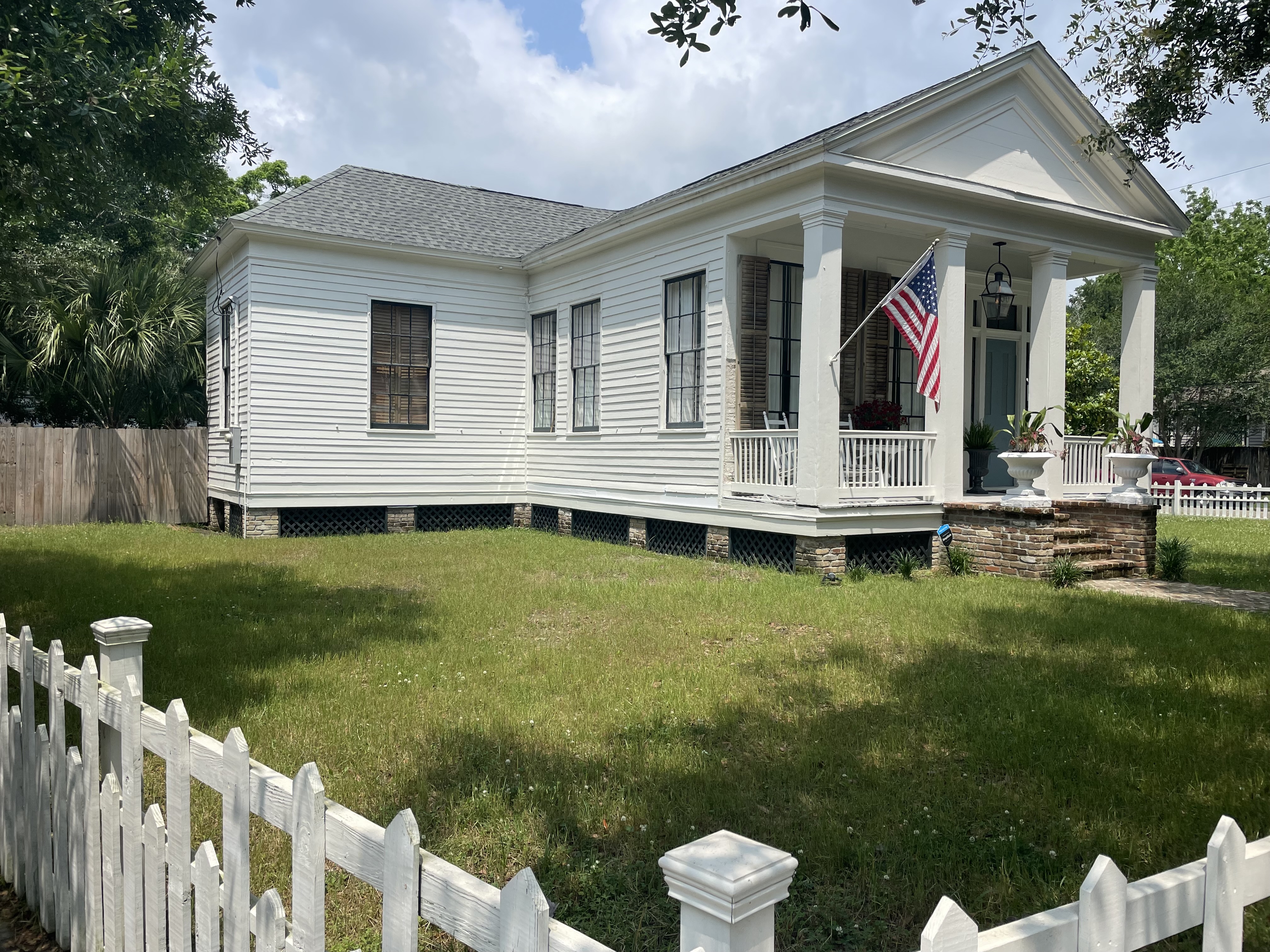
The buildings were repeatedly destroyed by fire in the French Quarter before safer building materials and building techniques were introduced— including fire lines built between roofs and mandates around density. The guide reviewed the major 4 styles of structures in New Orleans, and the eras they were built in— which we began to recognize around the city. The most distinct of which included a second wing of the home built to house urban slaves— these ‘carriage style’ residences were often built onto main houses so slaves could live on-site, but not in the main quarters (style pictured below).
We later would tour one of these homes, and learn about urban slavery, but that was to-come.


Our guide talked about the Creole people, which is a term to describe distinct identities all over the world. Louisiana Creole was a very distinct group that descended from Spanish or French, and could be used to describe any ethnic background. I was embarrassed to realize that I had thought of folks of mixed race as being Creole— instead, it was a cultural group that shared a colonial Louisiana background, with some blend of European, Native American, and African cultures.
The tour guide also spoke of Free People of Color in the New Orleans area— who were never enslaved and were often descended from African, Caribbean, and Native American cultures, and were typically of multiracial. These folks were a huge part of the fabric of the community in New Orleans, with many owning land or becoming artisans. Free men of color also served in the military in paid roles. They won full citizenship in the courts, but this did not prevent influential whites from keeping them out of government or restricting apprenticeship opportunities or educational funding for schools— discrimination still impacted them throughout and beyond the slave era.
As the day warmed up, we knew there was no way to sleep comfortably in the van in that kind of oppressive heat— and no way for Mac to be at-ease unless we had a firmly air-conditioned stay. So we booked an AirBNB and parked the van for a few days. The air conditioning in New Orleans was a must.
One thing we noticed with AirBNB listings in the New Orleans area was the emphasis each listing placed on safety. Having stayed in AirBNBs all over the country, I was surprised to see such marked attention on security. (Then I remembered, the group from my caravan in Big Bend National Park had warned of the same safety concerns).
Traveling in New Orleans with a non-drinker, as well as some well-founded concerns about safety being a pair of women, we had a spirited debate about whether going to Bourbon Street was even a good idea. But after a quick conference about it, we agreed to go, but leave by dusk— and I elected to keep my number of alcoholic drinks to a minimum.


Trying to leave concerns about safety on the back burner, we walked into a bar on Bourbon Street. I’m not exaggerating when I say this— the bartender was on crutches, and featured a dark blue shiner. When I playfully asked him how he received his injuries, he bluntly said “I was jumped out on the street when leaving work and they stole my wallet. And they also broke my tibia in two places.”
I blinked awkwardly— what does one say to that!?— and wished him a speedy recovery as I paid, leaving him an over-large tip for medical expenses. Then, promptly turned to my friend to report the incident— which only reinforced our same plan: stay off Bourbon Street by dusk, no matter what. Look, I have no idea if New Orleans is more or less dangerous than a typical city, but I do know that Bourbon Street was full of life pretty much all day, and it wasn’t incumbent on having a late night to have a decent time looking around there.
Bourbon Street was buzzing with activity— the brass bands and the drumlines all jockeyed for the best positions in front of tourists and the high-tiered hotel balconies. We paused for a long time in front of a group of young guys who were excellent drummers, and tipped them well for the enjoyment of the music (and their moves).

I decided it was time for that beer I’d promised myself, and as I walked, found there were no shortage of places to get one in a to-go cup for strolling. But there WAS only one place that offered me a plastic cup shaped like a woman’s rump.
Clearly, I chose that one. It was ridiculous, but ‘When in Rome’ as they say…


Look, Bourbon Street is really unclassy. It’s a mess of cheap, Las-Vegas-style bawdy action. And while I’m sure that appeals to some, we knew we’d find a more magical New Orleans elsewhere. Thus, we walked up the street a few different times, and moved on.
My friend astutely pointed out that New Orleans retained its ‘port town’ vibe in this way— it could be both seedy and classy at the same time (both often occurring on the same street), and that always felt exciting— like being on the edge of something thrilling about to happen.
Because of New Orleans’ obsession with voodoo and with the colorful funerary parades to honor the dead (jazz funerals), graveyard tours are a part of the typical New Orleans tourist experience. Not realizing we needed a reservation and a guide, we set off for the most famed graveyard in New Orleans — St. Louis Cemetery No. 1– and were quickly informed a high-noon reservation was the only time left that day (which meant nobody else was stupid enough to go in the blazing heat).
We signed up, and bought two huge bottles of water. And this is how we came to discover Nick Cage’s future gravesite…. But more on that shortly.


The graveyard itself was ancient and decidedly overgrown — which leant the whole experience a veil of both age and mystery. The crosses were often made of wrought iron bars, which had sometimes warped and bent with age. The crypts themselves were mostly Catholic — and above-ground to avoid the inevitably-high waterline. As in my ancient graveyards, one plot could contain hundreds of bodies.
As we rounded each corner of the small city of crypts, the guide pointed out famous landmarks and graves— yes, the ‘Easy Rider’ grave scene was filmed here, and Plessy from Plessy vs. Ferguson was also buried here— but it was the utter absurdity of seeing Nick Cage’s future grave that stuck with us. We casually trotted by the future resting place of Mr. The Mummy and Mr. “We Have to Steal the Declaration of Independence”— was that an Illuminati-like pyramid he chose?
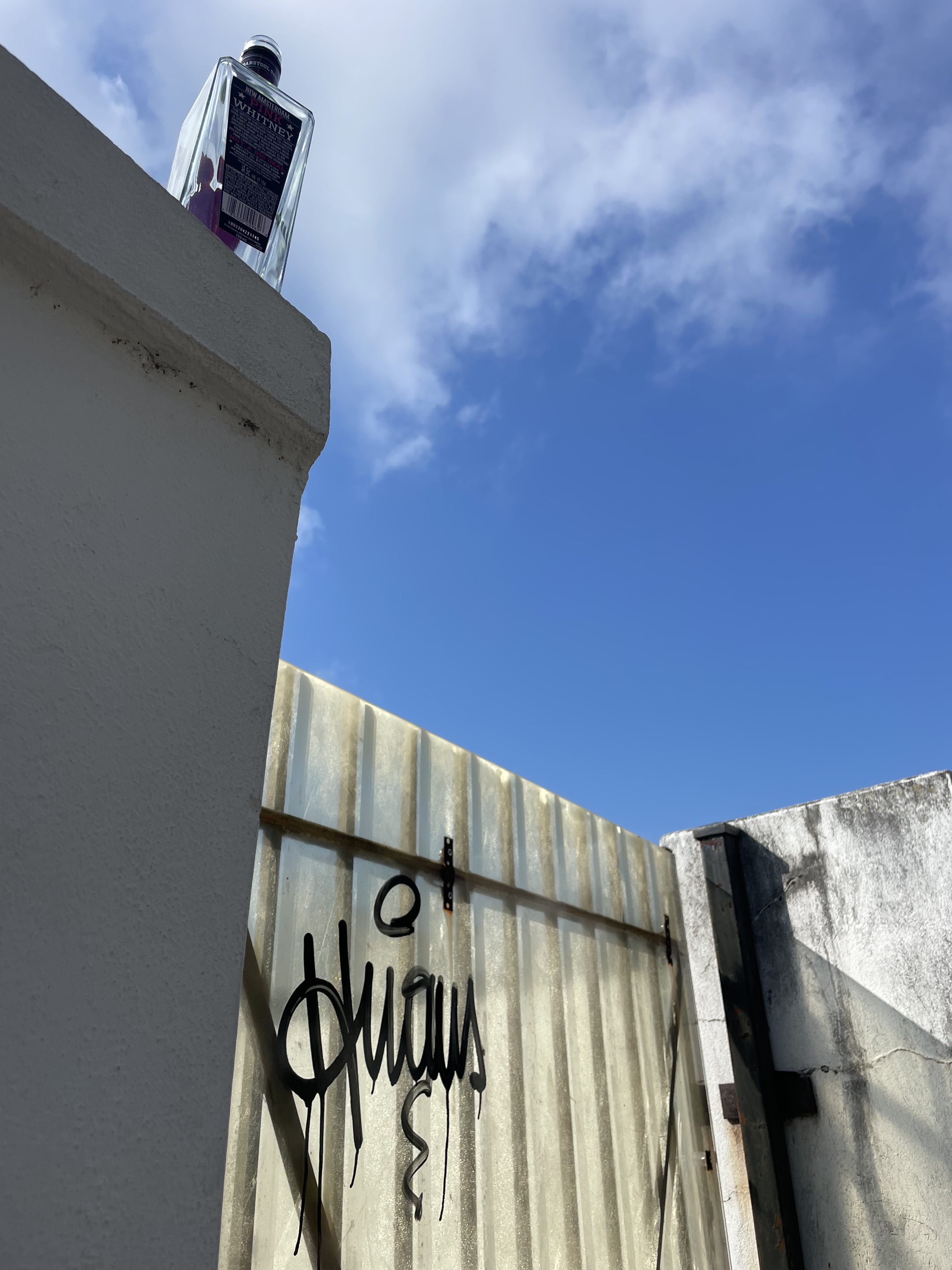
Why, yes, it was [on left]. Fits in perfectly with the aesthetic of the rest of the graveyard [right]? Nope.
Read the room, Nick.


The much-vaunted (and much-feared) grave of Marie Laveau — the famed “Voodoo Queen”— was inside. Marred by a thousand pens and Sharpies, the graffiti on the grave often contained 3 prominent Xs (sorry, Elon, you can’t trademark a letter)— forming the “XXX” that is normally associated with erotic dancing or “adult video” establishments— but in voodoo culture, means something very different.
The “XXX” people write on graves is to stir the person who lies there to grant a wish. (Cue creepy Halloween sounds).


If you want to learn about Marie Laveau, please (please) buy a reputable book about her. We selected one from the graveyard’s gift store, since the park service managed this— and we felt their curation of books would be trustworthy. By a scholar, this academic-but-accessible work blew open some common assumptions about Marie by the end of the first chapter.
What stuck with us was this: the way powerful women throughout history were deemed magical, as if there could be no worldly explanation for a self-assured, successful woman except for pure wizardry or witchcraft. Regardless of what Marie Laveau was about in reality, the myth of her took on epic proportions, as men fell all over themselves trying to square a defiant woman in a time that prized complacency and conformity.
I didn’t picture Marie Laveau’s grave because– well, let the woman rest.
On a random note, LYFT drivers in New Orleans are the best LYFT drivers in the country, hands down— this sounds like a bizarre thing to claim, but it’s something my friend and I ascertained immediately. The drivers (and we had many) were completely at-ease and kind, and seemed very invested in their riders having the best possible experience while visiting the city.
Each driver was so engaging and sweet, providing recommendations and thoughts about what to see, and also speaking expansively of life in the city, in just the right measure. They were lovely people, funny and wise– and always provided my friend and I with great information to make our trip better. (This reminded me of New York City cabbies back in the day).
Case in-point: one recommended a cigar place that hand-rolled their cigars onsite.


Going to New Orleans was a bit of a full-circle moment for my friend, who had grown up listening to albums that were recorded ‘live’ at Preservation Hall. While we could often hear jazz pouring from venues up and down each street, she wanted to see the original— the daily show at Preservation Hall. We got tickets in the front row— not realizing that in a minuscule venue that sat only 50-60 people, this would mean we were literally directly in front of the performers’ instrument bells.


During the show, the performing band spotted a few young men in the audience who were trumpters known around the area— and called for them to join the band onstage. This informal and improvisational act was unexpected, but knowing jazz– made sense somehow.
Throughout the performance, I was in awe— how could two guys who’d never practiced or played with this band before, so seamlessly and beautifully blend into it? Even with two ‘new’ members, this unit took each others’ cues as if they’d been making music together for a hundred years.
The band’s collected age had been on the high side— everyone about 60+ in age, old-timers of the New Orleans jazz scene, and the two additions were in their 30s— a generational change as one handed the baton to another, right in the hallowed stage of Preservation Hall.
We were lucky to experience it. And also, because no filming or photographs were allowed during the show– got to experience the music without interruption. Being truly present was a gift.


We happened upon the Hermann-Grima/Gallier Urban slave museum as we were walking one day, and the thought struck us both simultaneously that the stories of rural slaves were more known to both of us— yet we had yet to deepen our knowledge of urban slavery. The two docents at the front desk were deeply knowledgable and invited us to take a tour in the next few minutes, an offer we could not refuse.
The urban slaves in Louisiana were able to come and go fairly consistently, as they had chores that took them off the property— getting bread or groceries or walking to the fish market. They had to carry papers that identified them as slaves of their respective households, and they were often housed in attached or detached quarters in the back of the main house. Our docent explained that, as cited in this article by ’64 Parishes’ it was “rare to see any white people in the city’s marketplaces” because “‘almost the whole of the purchasing and selling of edible articles for domestic consumption’” was undertaken by enslaved folks. This article here goes more into depth on urban slavery in Louisiana: https://64parishes.org/entry/urban-slavery-in-antebellum-louisiana


These living conditions were hardly plush— the bedrooms that housed slaves were located above the kitchens and laundry, where searing heat would be added to the already-scorching days of summer, and lead to unbearable, inhumane temperatures above.
While even having any furniture would have been nicer than anything plantation slaves experienced, these broken and dingy leave-overs were often not quite functional. And since slaves were not given any privacy, few had proper bathrooms, and instead, would use crude facilities outside in the courtyard or bathe themselves in washtubs in the alleys (sometimes in full view of others).


Not to mention, the lady of this particular house (though the tour generally avoided speaking of the white owners) liked her bread a particular way— so despite the ready availability of fresh bread in stands all over the city, the lady had a massive bread-baking oven installed, and demanded fresh bread from it 3-4 times daily. This oven produced a massive amount of heat in addition to the regular cooking fires, making the heat in the kitchen area even more awful.
There was a courtyard entrance that slaves would enter to get to the residential area (they could never use the front door), and the back staircases that snaked up the back of the home to allow the servants to reach each room conveniently from the back of the house (without using the same stairwells as non-slaves). The staircases that slaves used to serve had wooden tops, which were worn uneven with the heavy footfalls of enslaved people carrying heavy loads of laundry, groceries, or even the household’s prams (pictured above).
In New Orleans, slaves could sometimes be ‘leant out’ to other households to perform duties for ‘wages’ that were often scant, but nonetheless, could be kept as they were earned. This practice was curtailed by city government officials as it became clear that some slaves were purchasing their own freedom via manumission — a practice that was eventually outlawed.
Our docent paused in the laundry area to inform us that laundryman or laundress was the most risky job for urban slaves— with a rate of injury that far surpassed other trades. This was also one of the skills most highly-valued by city households, and there were records of experienced laundry workers being bought for the equivalent of $50,000 in today’s money.
This was an eye-opening tour, and I’d highly recommend it if you are in New Orleans.
Afterward, we headed to a neighborhood that was recommended by none other than— another Lyft Driver. The Maringy area, with its epicenter on Frenchmen street— was described as a place that we could find more casual live music, and lots of positive energy. The street was buzzing when we arrived, and we noticed a hot dog place with a huge line. On inspection, “Dat Dog” offered vegetarian and vegan options— so we bit.


The dogs could be topped any way one liked, and they were spectacular.
The Maringy is an old Creole neighborhood, so the houses were done in the style of Creole Cottages— a very ‘tiny home’ vibe, full of cute lattice work and details. There was an artist fair happening in the area, and we got to see more jazz, and one of the best bands we watched in New Orleans— ironically, a Latin band full of brass players and a very charismatic singer.


Shopping later that day, we saw the local book “Goodnight, Pothole”— modeled after “Goodnight, Moon” and localized to have the narrator bid good-nite to the various kinds of potholes (and the junk people tossed in them to prevent injuries to their cars or themselves).


We remembered our architecture guide’s warnings about the sinking city, and every time we saw one of these doozies in the wild (below)— we understood why these potholes were there.


New Orleans is REALLY not like any other place— I found myself bummed to leave, feeling we had done so much, but also, just scratched the surface of this sweaty city built on silt.


Posted by Sun


