
Bandelier National Monument is one of the bunch of consistently-underated (and probably under-visited) National Monuments out there. Like so many others, it wasn’t on our radar, but driving around Santa Fe, we were lucky to see a sign directing us there.
We’re suckers for brown signs.
Only 30 minutes of windy-road, canyon driving later, we came to an area nestled into a former river valley. The literature provided by the visitors center let us know that a river running through here provided a lifespring for the native communities living here, before drying up in more modern times. It was still more lush than the rest of the desert area– with scrub trees and tall grasses blowing gently as we began the short walk to the cliff dwellings.


The walk to the dwellings was short and pleasant, with interpretive signs leading the way. The Ancestral Puebloan people lived here from approximately the 1100s to the 1600s, and the area set aside is 33,000 acres– but the developed area is over a mere 50 miles, which makes this an accessible place easy to visit in a short time.
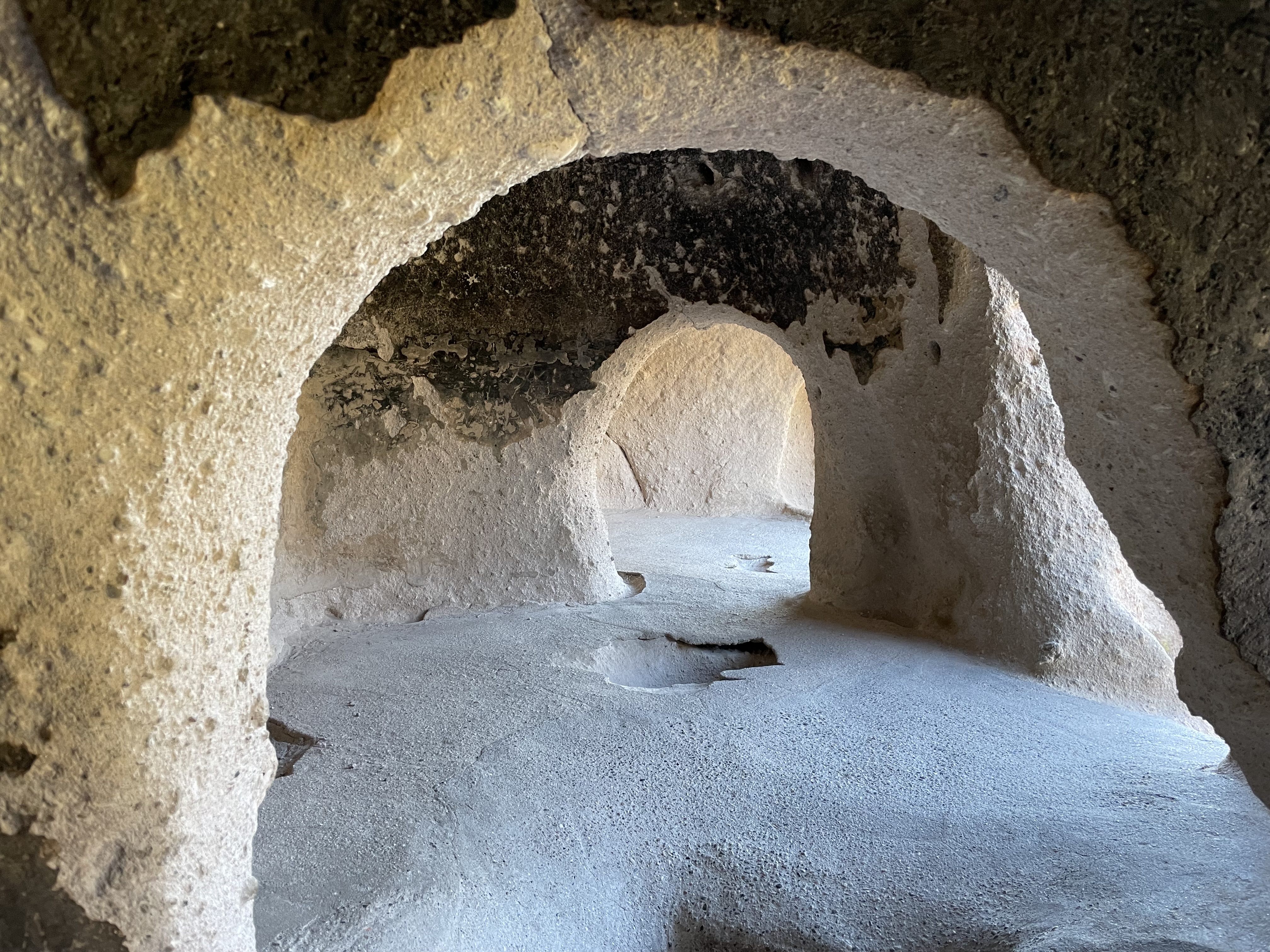
So how did they make the dwellings? These were largely carved out of volcanic layers of stone, meaning the material was a bit softer than some of the harder stone around it– making it easier to carve out with primitive tools.
There were hundreds of home dwellings in the Bandelier valley but also– Kivas– rooms that were set aside not for residences, but for gatherings. (*pictures below of the outside of the kivas).


Unlike the other rooms within the residents (which were square), kivas were round inside.
Some archeologists believe the kivas were ceremonial in some way– religious, or perhaps political. Either way, they are considered spiritual by the Pueblo tribes that co-manage the National Monument, and signs specifically asked for silence around them, and no photographs within them– which were easy requests to abide by. As a testament to the importance of kivas, warring communities of native folks would often burn kivas as a symbol of destruction when conquering others.


Built and utilized around the same time as the Gila Cliff Dwellings, though miles and miles apart– these differed in one important aspect. The dwellings at Bandelier were often multiple stories tall! Ascending up the lower part of large rock faces, it felt like a marvel to see the openings that once contained folks who lived high above the canyon floor.
Thanks to the voluminous timber in the area, the Puebloan people were able to use timbers as framing (see the round holes well-spaced below). Because of this, they could build directly into the rock in a stable enough manner to create roofs, and tiers of housing. And of course, the timber was also used for tall ladders that helped people scramble into upper homes with ease.


This was not for the weak-willed– the scramble up some of the taller ladders was a bit harrowing. A few of the dwellings were hundreds of rungs upward– near the top of the cliffside rested the famed Alcove House– the journey to which was a good ankle stabilization test, as well as a test of one’s concern about heights. And being at a higher altitude, we huffed and puffed a bit with the climb (Santa Fe is itself at about 14,000 feet).


We didn’t spend very long at Bandelier National Monument– only about two hours, before we had to be on our way again. But the place left a huge mark on Moon and I– it solidified our joy in the less-traveled National Monuments, and made us all the more resolved to seek them out just as much as National Parks.
Moon half-joked that this would be a great place to come in case of any imminent natural disasters made worse by climate change — having been dwellings for so long, maybe they could be again? We chuckled, but also made a mental note… just in case.


Posted by Sun


