
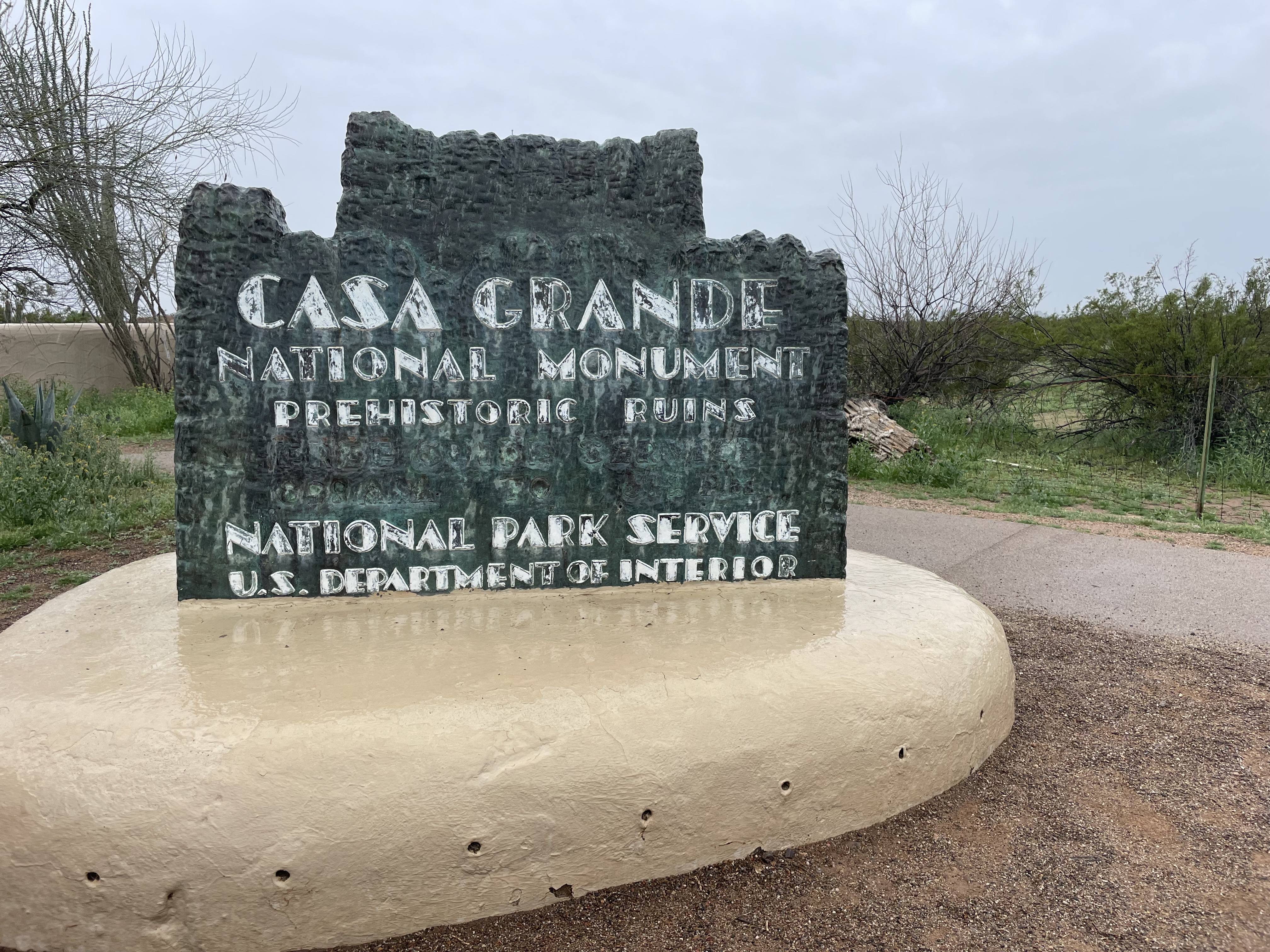
It was a rainy spring day when I stopped at Casa Grande Ruins National Monument.
The entirety of the monument was one large structure– but that was all that remained of a huge ancient settlement. Visiting Casa Grande is much more about learning what previously was there in the past, more than looking at its current state.
Though, it’s remarkable the big building was still standing after SEVEN CENTURIES– the structure dates to the 1100s (around the same time as the Gila Cliff Dwellings). It is estimated that people built community around the structure until about 1450, when the area was abandoned, likely due to drought.
At 4 stories in the center, it was a magnificent structure for its time.


The roof above the building was originally built in the 1900s to preserve it, then reconstructed as-needed over the years. The building itself is made of adobe and Caliche– a substance that forms naturally in areas of low rainfall, and was also used by the Mayans and other civilizations in arid climates.
The most interesting thing about the Casa Grande Ruins was the evidence in the visitors center that the Hohokam people who built it also created a huge network of irrigation channels with very few tools. Basically, they dug massive irrigation channels with only hand tools– backbreaking work, but work that made the dry terrain able to support thousands of residents in a thriving settlement.
It’s speculated that irrigation work kept the civilization going for over a thousand years.


Unfortunately, there’s evidence of graffiti all over the building– over the years, people chipped away at it and added initials or text to its edifice– so the National Park system had to shut the building entirely. There is no doubt that Casa Grande is slowly disappearing into the desert, but the artifacts that remained have been a huge boon to archeologists who are learning about this thriving community.


The visitor’s center has some great information and a video that gives the site context– but Casa Grande isn’t a place you need to spend a ton of time, as there isn’t terribly much to see. You can easily see the site in a few hours, get your passport stamp (*NERDS*), and then hit the road again.

Posted by Sun


