

Dallas might get all the headlines due to being the shiny, modern capital city of Texas– but if you ask me, Fort Worth is where it’s at. It’s the humble brother of the glitzy Dallas– and it happens to be a place where there’s a rodeo essentially every day of the year.
Notably, it’s a rodeo mostly for tourists– if you want to see ‘real’ Texas rodeo, you should rock up to the smallest towns in Texas on their rodeo weekends.
But there are some ways that even Fort Worth itself can feel like a small town– despite being only 20 minutes or so from Dallas. I distinctly remember passing through once and seeing a man mounted on horseback running an errand to a convenience store. I was, specifically, waiting at a stoplight while he passed through on his horse on a green light.
The Fort Worth Stockyards are a section of town that is mostly frequented by folks who want a flavor of that Texas country in the middle of a city. And surprisingly, it’s possible to get it (a little bit)– there is a delightful little strip of historic structures with cute edifices full of small bars and restaurants.


The main event of being in Fort Worth is the rodeo at Cowtown Coliseum. The name isn’t just cute– the city was nicknamed ‘Cowtown’ after the Civil War,
With the rodeo beginning in 1918, there’s some who say this was the first-ever indoor rodeo ground. It is also thought to have originated bull riding as an event. Today, nearly a million people attend this event each year to get a big dose of Texas flavor.


When I went into the Coliseum, I was surprised to find that it felt small, despite being a large arena– because the seats didn’t go terribly deep, meaning every seat in the house was essentially a good one.
I bought a reasonably-priced ticket and felt like I had a good view of the action– though I did use a telephoto lens on my DSLR camera to capture the following (dang, I wasn’t sitting THAT close).

The rodeo began with some pageantry around the Star Spangled Banner involving a woman riding through the arena with an American flag. And then, after some brief setup, the events began.


But Megan, you might ask, is the rodeo humane? Honestly, I have no idea– it likely depends on the locality in which it is held, and what standards they adhere to (vs. let go). I am usually particularly careful about not spending dollars at places with shady practices– especially those who utilize animals in some way for profit (for instance, I don’t go to horse races)– but I made an exception here.
Rodeo has been part of the fabric of America for hundreds of years, and experiencing a rodeo is part of experiencing this country (for better or worse): thus, I thought that was worth witnessing. I also figured that a famed rodeo put on for tourists nightly would have more oversight. And while some rodeos engage in practices like ‘prodding’– which undoubtedly stresses the animals, it is not easy to know when these unsavory things are done, and when they are not.

Watching the rodeo events was fascinating– I’d been before, to much smaller events– but these performers were semi-professional. Hailing from all around the country, these cowboys and cowgirls (cowpeople?– no, that sounds like something different altogether) managed to ride the bulls and broncos extremely skillfully– but in a true show of how difficult this sport is… only one contestant managed to stay on a bull for 8 seconds. The rest were bucked off before their time could count.


And getting bucked off? It’s not for the faint of heart. Look at this photo I took– while blurry, it captures a lot of the danger very clearly. This 2,000-pound piece of muscle is very, very close to this man, and the rodeo clowns are bravely throwing themselves into harm’s way to mitigate the situation.
Holy wow– nobody got hurt, and that’s some skills and some luck, right there.

The preparation for these short rides was careful and deliberate– it was something to watch handfuls of cowboys hunched over the gate as they helped the cowboy prep, and helped him mount his ride. These guys were either useless observers or were doing important work, and it was hard to tell which.

Heck, maybe they were just calming their buddy’s nerves before the gates opened. Either way, there’s a reason the bulls are a crowd favorite– while there were plenty of events– roping, barrel racing, and so on– the bulls were the main event.


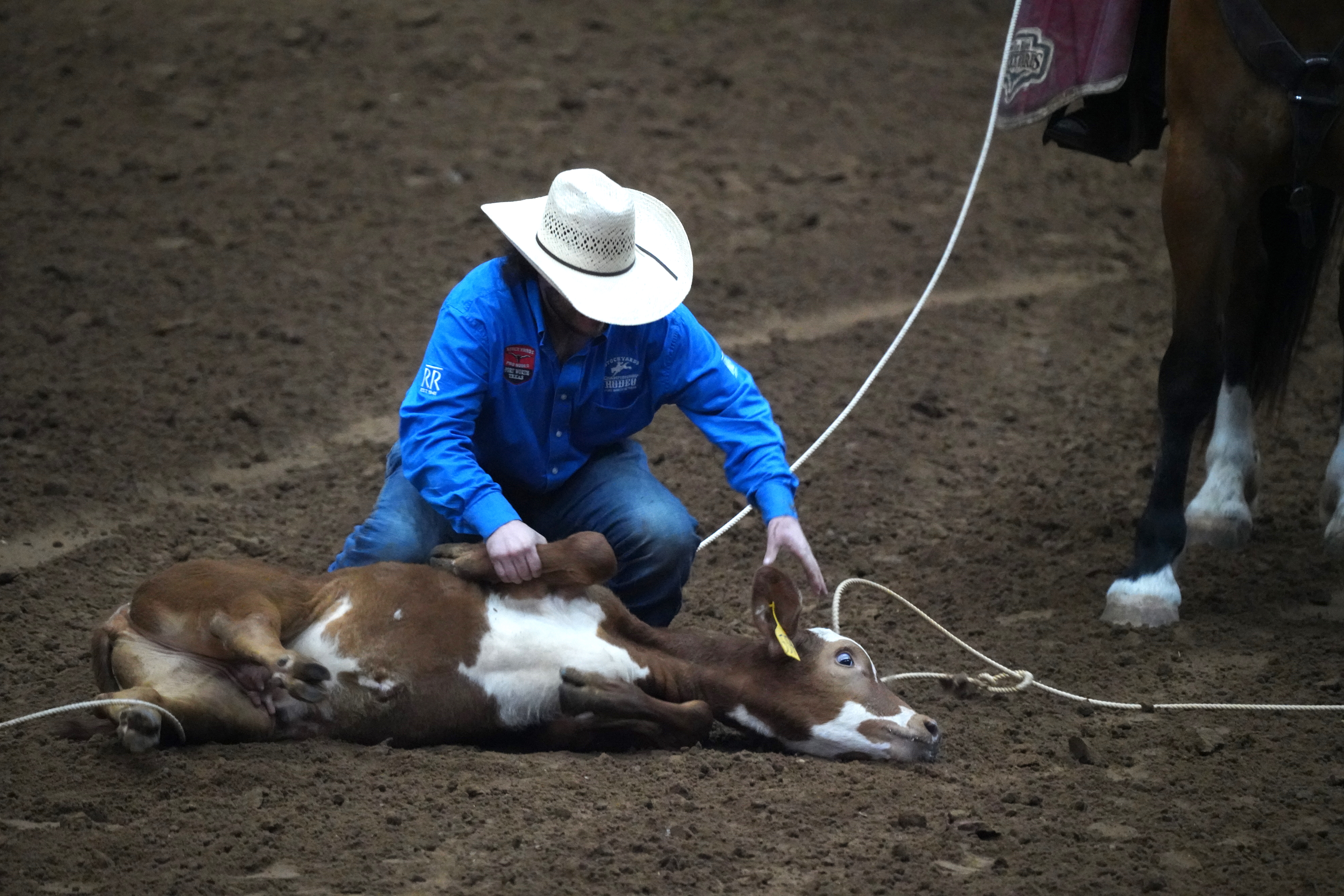
Roping or lassoing was another dramatic event– as men and women tried to catch, then wrestle calves down, then tie their legs. They promptly let them go and untied them, but only after they were scored on technique and speed.


Who’s having a better day right now? This gentleman on a bucking bronco, or you?

There were also ‘trick’ lassoers– the gentleman that came out to close the show was a marvel. As he moved his lasso deftly around himself and his horse, he did tricks to emphasize each feat. His horse patiently waited and obeyed, standing perfectly still and eventually supporting this tall man’s full weight as he eventually STOOD UP on the saddle.


Even though this rodeo was clearly put on for tourists, it was still enjoyable– and very professional. The riders, tricksters, lassoers, and other cowboys and cowgals were skilled and insanely brave. These types of ‘feats of bravery’ are probably all over YouTube, but there is always something fascinating about the microcosms we inhabit. And in Texas, rodeo is one of those habitats– while not unique to the state, they are emblematic of it.
If you’ve never seen a rodeo before, you could do much worse than the daily one at Cowtown Coliseum in Fort Worth.

Posted by Sun


